










7 Route Accounting Solutions Built for Growing Wholesale Distributors
Growth creates accounting problems long before most distributors expect it. At first, reconciling invoices, tracking truck inventory, and updating customer balances might only take an hour at the end of the day. Add more drivers, more routes, and more customers, and that same work can easily consume an entire afternoon.
That’s where route accounting software starts paying for itself. The right platform keeps deliveries, invoices, payments, inventory, and accounting connected instead of forcing office staff to reconcile information from multiple systems. Some solutions focus almost entirely on financial workflows, while others combine accounting with field sales, direct store delivery, and retailer ordering.
These seven platforms are worth comparing if your distribution business is growing.
1. RouteStar Solutions
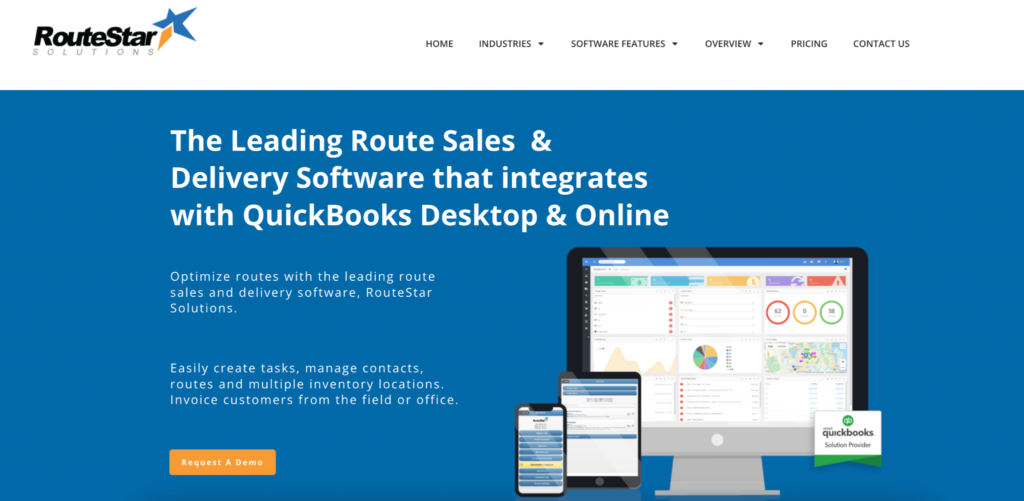
Few platforms are as closely associated with QuickBooks-based route accounting as RouteStar Solutions.
The software focuses on helping distributors manage deliveries, truck inventory, invoicing, customer accounts, and route scheduling while keeping accounting records synchronized. Businesses that already rely on QuickBooks often appreciate that they don’t need to redesign existing financial processes.
Instead, they simply add stronger delivery management around them.
Core features include:
- Route accounting
- Mobile invoicing
- Truck inventory
- Delivery scheduling
- Customer portal
- Route mapping
- Two-way QuickBooks synchronization
RouteStar keeps its attention on financial accuracy and daily delivery operations rather than expanding into broader retail execution or merchandising.
A practical option for
Distributors using QuickBooks who want dependable route accounting without unnecessary complexity.
2. SimplyDepo
Route accounting doesn’t happen in isolation. Invoices depend on deliveries. Deliveries depend on orders. Payments, inventory, and customer records all need to stay synchronized if accounting is going to remain accurate.
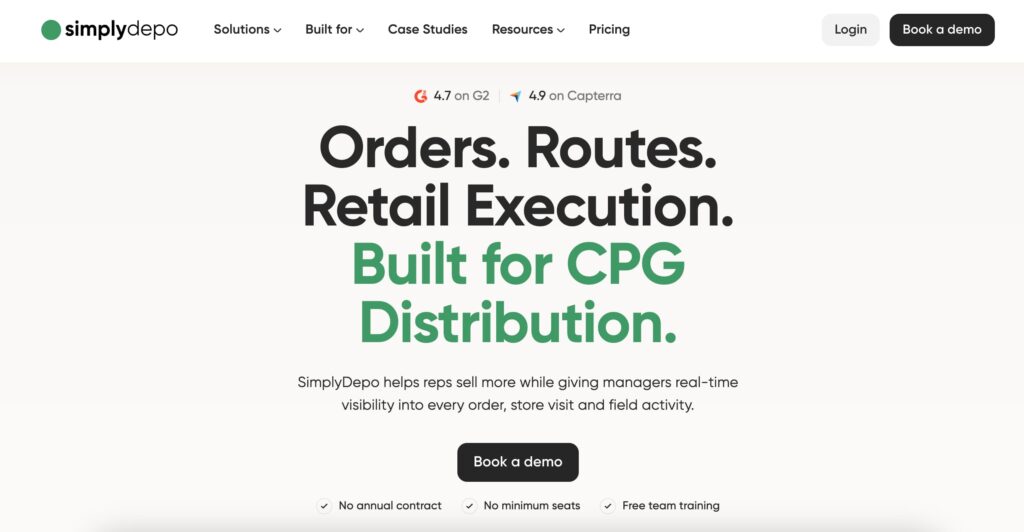
SimplyDepo approaches route accounting as part of a complete operational workflow. Drivers and field representatives can capture orders, generate invoices, collect payments, record proof of delivery, and synchronize customer information with QuickBooks Online while still working in the field.
That reduces the amount of reconciliation waiting for accounting teams at the end of the day.
Key capabilities include:
- Route accounting
- Mobile invoicing
- Route planning
- Proof of delivery
- Payment collection
- Truck inventory support
- Customer account management
- Offline functionality
- Native QuickBooks Online synchronization
Because accounting data stays connected with sales and delivery activities, office teams spend less time correcting information after routes are completed.
Best fit for
Wholesale distributors looking to combine route accounting with field sales, deliveries, and operational workflows.
3. bMobile Route
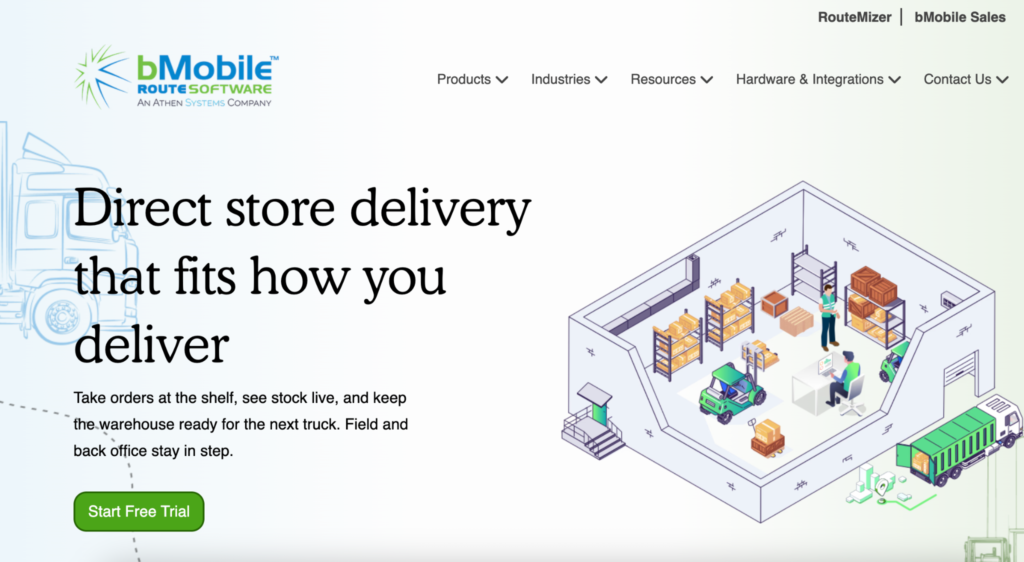
For distributors in food and beverage, route accounting often sits at the center of the entire business.
bMobile has spent years refining workflows around deliveries, truck inventory, warehouse coordination, customer invoicing, and operational reporting. That experience has made it a familiar choice for businesses managing large delivery fleets.
Rather than emphasizing customer portals or merchandising, the platform concentrates on keeping operational and financial data aligned.
Highlights include:
- Route accounting
- Truck inventory
- Warehouse integration
- Mobile invoicing
- Delivery management
- Inventory control
- Reporting
- ERP integrations
Businesses with established delivery operations often value bMobile’s mature approach to route accounting over feature-heavy all-in-one platforms.
Worth considering when
Inventory accuracy and delivery accounting are among your highest operational priorities.
4. LaceUp Solutions
LaceUp Solutions has long focused on distributors that need more than basic invoicing.
Its route accounting tools support truck inventory, customer pricing, delivery management, and DEX invoicing for businesses supplying major retail chains. Those capabilities make it a practical option for companies working in more demanding distribution environments. Rather than trying to simplify every workflow, LaceUp concentrates on operational accuracy.
Key capabilities include:
- Route accounting
- Truck inventory
- Mobile invoicing
- Delivery management
- DEX invoicing
- Multi-ERP integrations
- Customer pricing
- Route tracking
Businesses with straightforward delivery routes may not need every feature. For distributors handling complex retail requirements, though, that additional functionality can be valuable.
A smart choice for
Distributors working with large retail chains or requiring advanced delivery accounting capabilities.
5. Pepperi
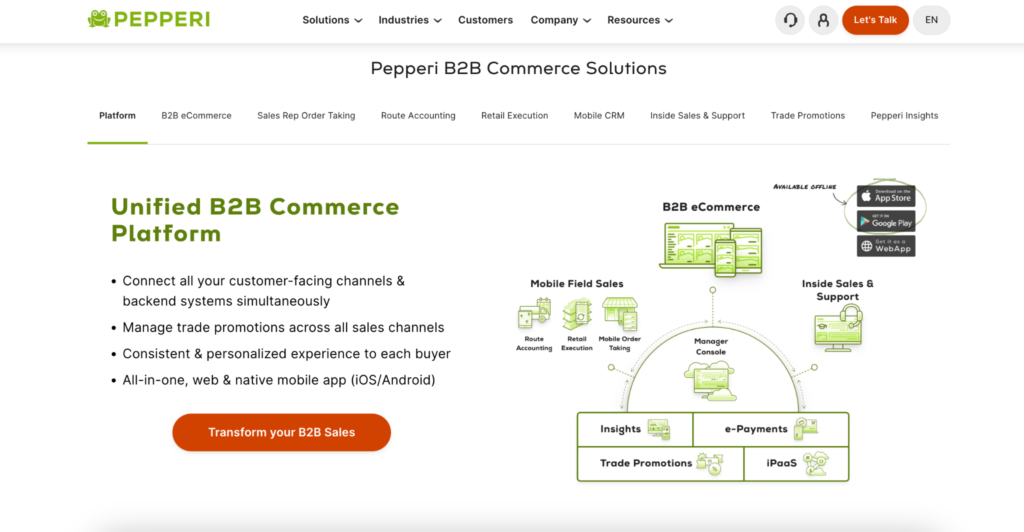
Route accounting is only one piece of Pepperi’s broader platform. The software combines field sales, retail execution, customer ordering, pricing management, and enterprise integrations into a single environment.
Financial workflows become part of a much larger operational system, making Pepperi attractive to organizations with complex business structures. That broader scope also makes it one of the more configurable solutions on this list.
Its feature set includes:
- Route accounting
- Mobile sales
- Customer pricing
- B2B commerce
- Retail execution
- ERP integrations
- Workflow automation
- Enterprise reporting
Pepperi isn’t designed for quick implementation. It’s built for businesses willing to invest more time upfront in exchange for long-term flexibility.
Best suited to
Enterprise distributors managing large field operations and multiple ERP systems.
6. Orders in Seconds (OIS)
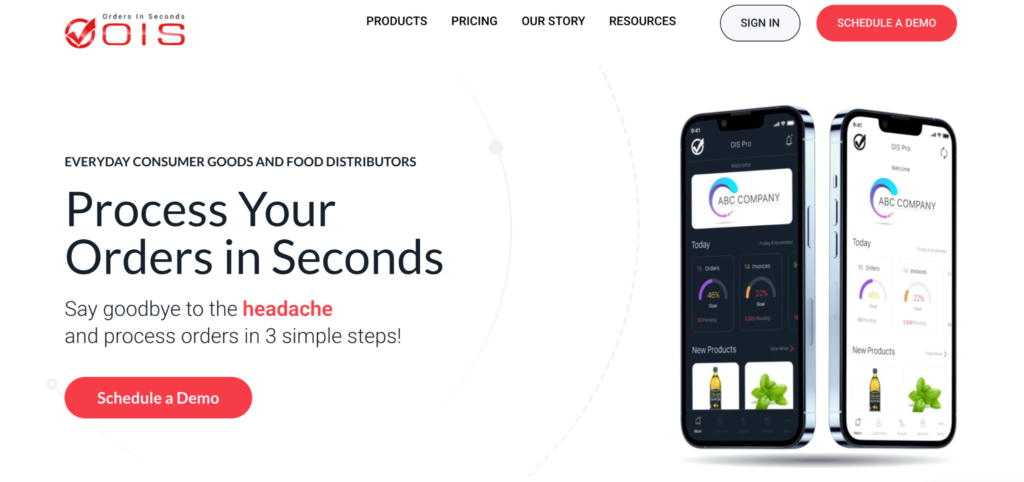
Orders in Seconds approaches route accounting from the sales side. Its primary focus remains mobile order entry, but by integrating closely with QuickBooks it helps ensure financial information flows from customer visits into accounting with fewer manual steps.
That makes it especially useful for distributors that already have established delivery operations.
Highlights include:
- Mobile order capture
- Route sales support
- Customer management
- QuickBooks Online integration
- QuickBooks Desktop integration
- Offline operation
- Digital catalogs
Businesses looking for a dedicated accounting platform may prefer more specialized software, but companies wanting to improve sales-to-accounting workflows often find OIS more than sufficient.
Worth considering when
Your biggest challenge is moving customer orders into accounting quickly and accurately.
7. Orderwerks
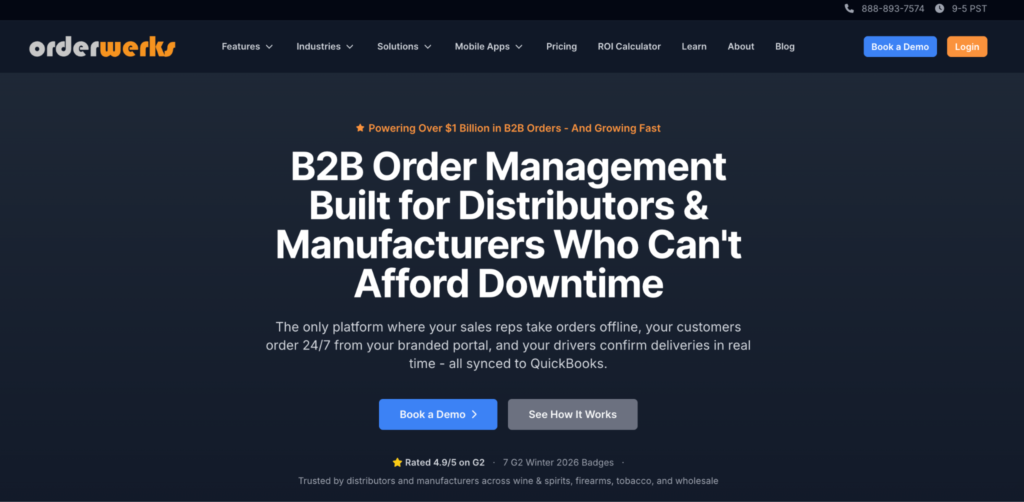
Orderwerks combines customer ordering with field operations and financial management. The platform supports B2B ordering, mobile sales, route management, and accounting integrations, making it useful for distributors serving wholesale customers across different industries. It also includes features aimed at several regulated sectors, something relatively few competitors offer.
Core capabilities include:
- B2B ordering
- Route management
- Mobile sales
- Customer pricing
- Offline support
- Multi-accounting integrations
- QuickBooks connectivity
While route accounting isn’t its only focus, it forms an important part of the broader operational workflow.
A good fit for
Wholesale distributors that want route accounting alongside customer ordering and field sales tools.
What Route Accounting Software Should Integrate With
Good route accounting software shouldn’t operate on its own. Accounting, inventory, customer records, invoicing, payments, and delivery information all need to move between systems without requiring manual updates. That’s why integrations often matter just as much as individual features.
For many growing distributors, QuickBooks connectivity is the first priority. Larger businesses may also require ERP integrations, warehouse management systems, customer portals, or payment processing platforms. The stronger those connections are, the less time office staff spend correcting information after deliveries are complete.
When QuickBooks Alone Is No Longer Enough
QuickBooks is an excellent accounting platform, but it wasn’t designed to manage every aspect of route distribution.
As delivery operations grow, distributors often need route planning, mobile invoicing, proof of delivery, truck inventory management, and customer servicing that extend beyond traditional accounting. That’s where dedicated route accounting software becomes valuable.
Instead of replacing QuickBooks, many distributors choose software that works alongside it. Accounting remains in QuickBooks while operational activities happen in the field, with both systems staying synchronized automatically.
FAQ
What is route accounting software?
Route accounting software helps distributors manage deliveries, invoicing, truck inventory, customer accounts, payments, and financial reconciliation.
Who needs route accounting software?
Wholesale distributors, food and beverage companies, consumer goods manufacturers, and businesses delivering products directly to retail customers.
Can route accounting software integrate with QuickBooks?
Yes. Many platforms offer QuickBooks integration, while others also support ERP systems such as SAP or NetSuite.
What’s the difference between route accounting and DSD software?
Route accounting focuses on financial and delivery processes, while DSD software often includes broader capabilities such as field sales, route planning, retail execution, and customer ordering.
Strong Accounting Starts Outside the Office
Accurate accounting doesn’t begin when invoices reach the finance department. It starts in the field, where orders are captured, deliveries completed, inventory updated, and payments collected. Route accounting software connects those activities into a single financial workflow, giving growing distributors greater visibility and far less manual reconciliation at the end of every delivery day.